

A clean workplace is more than a matter of appearance. Regular professional cleaning can help offices maintain a healthier, more welcoming environment while keeping floors, restrooms, common areas, and frequently touched surfaces in better condition.
There is no single cleaning schedule that works for every facility. A small office with limited traffic may need a different routine than a busy restaurant, medical facility, retail store, or industrial property.
The right cleaning frequency depends on factors such as foot traffic, occupancy, facility size, the type of work performed, operating hours, and how quickly different areas become dirty. This guide explains how often different types of businesses may need professional cleaning and how to create a practical schedule for your office.
How Often Should an Office Be Professionally Cleaned?
Many offices benefit from professional cleaning several times per week or daily, depending on employee count, visitor traffic, operating hours, and how quickly the facility becomes dirty.
Routine office cleaning may include:
- Vacuuming carpets and rugs
- Sweeping and mopping hard floors
- Dusting surfaces
- Emptying trash and recycling
- Cleaning and disinfecting restrooms
- Cleaning breakrooms and kitchens
- Wiping frequently touched and shared surfaces
- Cleaning reception areas, entrances, and common spaces
For a more detailed breakdown of routine office cleaning tasks, use this office cleaning checklist to help organize your cleaning routine.
A smaller, lightly occupied office may be adequately maintained with professional cleaning once or twice a week. Larger or busier offices may benefit from daily cleaning to keep workspaces, restrooms, and common areas consistently clean.
The right frequency depends less on office size alone and more on employee activity, foot traffic, the type of work performed, and how quickly the facility requires cleaning.
What Determines How Often Your Office Should Be Cleaned?
Before choosing a daily, weekly, or customized cleaning schedule, consider how your office is used and maintained.
1. Foot Traffic
Foot traffic is one of the biggest factors affecting cleaning frequency.
Entrances, hallways, floors, restrooms, and shared spaces can accumulate dirt and debris quickly when employees, customers, or visitors are constantly moving through the building.
A lightly used office may need professional cleaning a few times per week, while a busy office with heavy employee and visitor traffic may benefit from daily service.
2. Number of Employees and Visitors
More people generally means more surface contact, waste, restroom use, and tracked-in dirt.
A small office with a handful of employees may have significantly different cleaning needs than a large office with hundreds of employees and frequent visitors.
Occupancy should therefore be considered when determining how often professional office cleaning is needed.
3. Type of Business
Different businesses have different cleaning requirements.
A standard office may primarily need routine dusting, vacuuming, restroom cleaning, trash removal, and common-area maintenance. A restaurant has to manage food residue and grease, while a healthcare facility requires cleaning practices appropriate to patient-care environments.
4. Facility Size and Layout
Larger facilities generally require more cleaning time and coverage.
Multiple floors, numerous restrooms, conference rooms, breakrooms, warehouses, high ceilings, and large common areas can all affect the scope and frequency of professional cleaning.
5. Daily Activity and Operating Hours
An office that operates for long hours or experiences activity throughout the day may need more frequent attention than a workplace occupied only during standard business hours.
Some offices may also benefit from daytime cleaning support, particularly when restrooms, entrances, or other high-traffic areas need attention while the facility is operating.
6. Industry and Sanitation Requirements
Certain industries have specific cleaning, sanitation, or infection-control requirements.
Healthcare facilities, for example, use risk-based environmental cleaning practices, with high-touch surfaces generally requiring more frequent attention than low-touch surfaces.
For community settings such as offices and other commercial facilities, cleaning frequency can also depend on whether surfaces are visibly dirty, how often they are touched, and whether the facility has specific cleaning requirements.
Recommended Cleaning Frequency by Business Type
The following schedule provides a general starting point. Actual cleaning frequency should be adjusted based on traffic, occupancy, facility type, daily activity, and specific cleaning requirements.
| Business Type | Routine Cleaning | Deep or Periodic Cleaning |
| Medical & Healthcare Facilities | Daily cleaning with additional attention to high-touch and patient-care areas based on facility needs | Specialized cleaning and disinfection according to facility procedures and risk |
| Restaurants & Cafes | Daily kitchen, dining, restroom, floor, and surface cleaning | Regular deep cleaning of grease, equipment, hard-to-reach areas, and floors |
| Retail Stores | Daily or frequent cleaning of floors, entrances, restrooms, counters, and high-touch surfaces | Periodic floor, window, and display-area cleaning |
| Standard Offices | Daily to several times per week depending on traffic and occupancy | Periodic carpet, floor, window, and detailed cleaning |
| Warehouses & Industrial Facilities | Regular cleaning of active work areas, floors, restrooms, and shared spaces | Scheduled cleaning of high surfaces, machinery areas, accumulated dust, drains, and other specialized areas |
These are general guidelines rather than strict requirements. A high-traffic facility may need more frequent service, while a smaller, lightly occupied business may require less.
Daily Cleaning vs. Weekly Cleaning: Which Does Your Office Need?
The choice between daily and weekly professional office cleaning depends on how your workplace is used and how quickly cleaning needs build up.
Daily office cleaning may be appropriate for:
- Busy offices with many employees or visitors
- Workplaces with high foot traffic
- Offices with frequently used restrooms and breakrooms
- Facilities that need consistently maintained common areas
- Work environments where cleanliness is especially important
Weekly office cleaning may work for:
- Smaller offices with fewer employees
- Lightly occupied workplaces
- Offices that remain relatively clean between professional visits
- Facilities where employees handle minor day-to-day tidying
Many offices benefit from a combination of professional cleaning frequencies. For example, an office may receive routine cleaning several times per week, while restrooms, floors, trash, and high-touch surfaces receive additional attention based on daily use.
The goal is to create a schedule that keeps the office consistently clean without relying on a one-size-fits-all approach.
Signs Your Office May Need More Frequent Cleaning
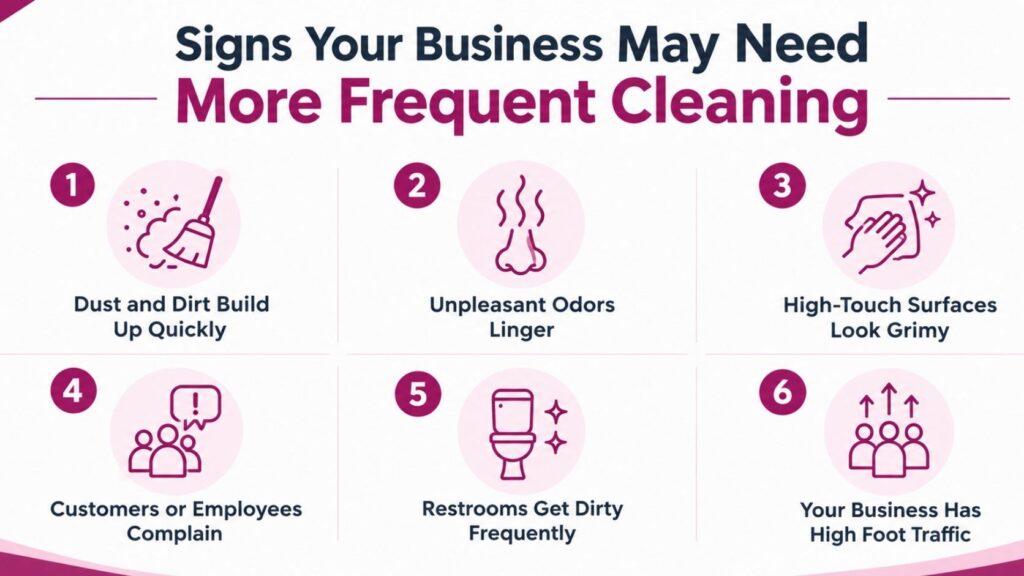
Your current cleaning schedule may not be sufficient if you regularly notice:
- Trash overflowing before the next cleaning visit
- Restrooms becoming difficult to maintain
- Dust accumulating on surfaces
- Floors showing visible dirt, stains, or tracked-in debris
- Frequently touched surfaces being overlooked
- Employees spending too much time handling cleaning tasks
- Customers or employees frequently commenting on cleanliness
- Certain areas becoming difficult to maintain between professional cleaning visits
If these problems occur regularly, you may need to increase cleaning frequency, expand the scope of service, or adjust which areas receive attention each day.
When Should You Schedule Deep Cleaning?
Routine cleaning handles everyday dirt and maintenance, but some areas need more detailed attention periodically.
Deep cleaning may include:
- Detailed floor care
- Carpet cleaning
- Window cleaning
- High-level dusting
- Baseboards and corners
- Hard-to-reach surfaces
- Detailed restroom cleaning
- Areas that are not addressed during every routine visit
The timing depends on the facility. Some businesses may schedule certain deep-cleaning tasks monthly, quarterly, or seasonally, while high-traffic facilities may need them more frequently.
Professional floor care is another consideration. Floors exposed to constant traffic can gradually develop scuffs, stains, and embedded dirt even when they are regularly swept and mopped. Periodic professional floor maintenance can help keep them looking presentable and maintain their condition.
Deep cleaning may also be appropriate before or after a major event, following renovations or construction, before an inspection, or when routine cleaning is no longer keeping up with accumulated buildup.
How to Create the Right Commercial Cleaning Schedule
Instead of choosing a cleaning frequency based on a generic recommendation, evaluate how your facility is actually used.
Consider:
- How many people use the facility each day?
- Which areas receive the most foot traffic?
- How quickly do restrooms, floors, entrances, and common areas become dirty?
- Does the business have industry-specific sanitation or cleaning requirements?
- Which tasks need to happen daily, weekly, monthly, or periodically?
- Would daytime cleaning support help maintain high-traffic areas?
- Are employees spending time on cleaning tasks that could be handled by a professional service? If you’re deciding between handling cleaning internally and hiring a provider, compare in-house vs. outsourced janitorial services to understand the differences.
From there, create a schedule based on the areas that need the most attention.
For example, restrooms and high-touch surfaces may need daily attention, while detailed floor care, windows, carpet cleaning, and high-level dusting can be scheduled weekly, monthly, quarterly, or as needed.
The goal is not simply to clean as often as possible. It is to create a consistent cleaning plan that keeps important areas clean, presentable, and properly maintained.
Keep Your Office Clean With a Customized Professional Cleaning Plan
There is no universal answer to how often every business should be professionally cleaned.
A small, lightly occupied office may need professional service once or several times a week, while a busy retail location, restaurant, healthcare facility, warehouse, or other high-traffic commercial property may require daily cleaning and additional attention to specific areas.
The right approach is to combine routine cleaning with periodic deep-cleaning services while adjusting the schedule based on traffic, occupancy, facility size, industry requirements, and how quickly different areas become dirty.
At Paragon Peak Building Maintenance, commercial cleaning and janitorial services can be tailored to the needs of your facility. Professional commercial cleaning involves routine office cleaning, janitorial services, floor care, restroom cleaning, disinfection, and daytime cleaning support.
A customized cleaning schedule can help your business maintain a cleaner, more welcoming facility while allowing your team to focus on its daily operations.