
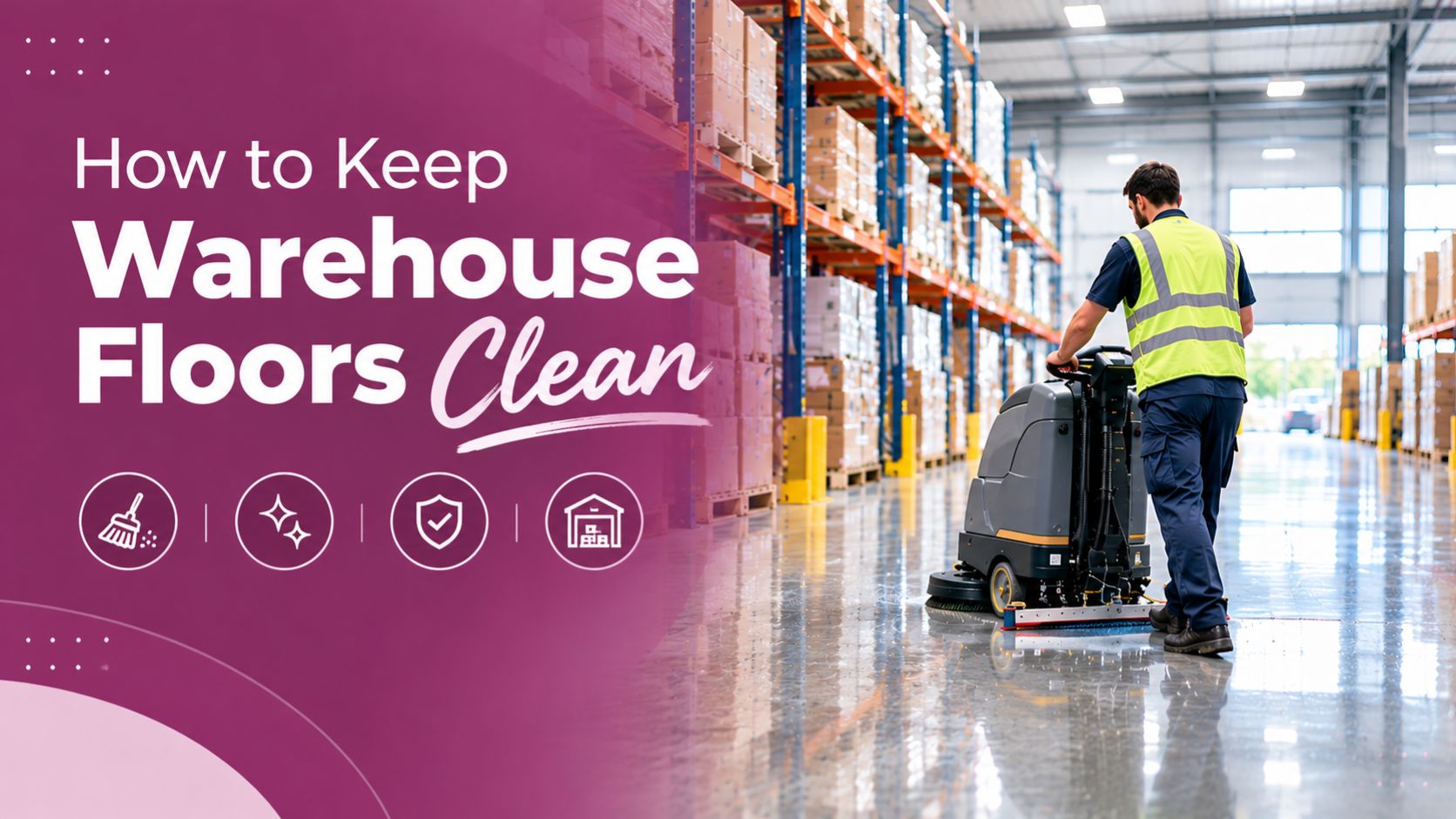
Warehouse floors experience constant activity, from employee foot traffic and forklift movement to heavy equipment, material handling, and daily deliveries. Over time, dust, dirt, oil, grease, and packaging debris can build up, making floors harder to maintain and creating potential safety risks. Without proper care, even durable flooring can become stained, worn, or damaged.
Keeping warehouse floors clean is about more than maintaining appearances. It helps reduce workplace hazards, supports smooth operations, and protects your flooring investment. With a consistent cleaning routine, suitable equipment, and preventive maintenance, you can keep your warehouse floors in top condition.
Why Is Regular Warehouse Floor Cleaning Important?
A warehouse floor needs regular attention because it directly affects workplace safety and daily operations. Dust, loose debris, and liquid spills can cause slips, trips, and falls, while accumulated dirt may affect equipment and make material movement more difficult.
Regular cleaning helps prevent these issues before they become bigger problems. It also protects flooring from premature wear, makes the facility easier to manage, and creates a cleaner environment for employees and visitors.
Benefits of Regular Warehouse Floor Cleaning
A consistent cleaning routine offers several advantages beyond a better-looking facility.
- Improves Workplace Safety: Removing spills, dust, and loose debris helps reduce common slip and trip hazards.
- Protects Flooring: Regular maintenance prevents dirt buildup and helps minimize staining, scratches, and premature surface deterioration.
- Supports Equipment Performance: Removing dust and debris from work areas helps keep machinery and equipment surroundings cleaner.
- Improves Productivity: Clear walkways and organized workspaces let employees and equipment move more efficiently.
- Creates a Better Working Environment: Clean floors contribute to a more organized, professional facility.
Common Challenges of Warehouse Floor Cleaning
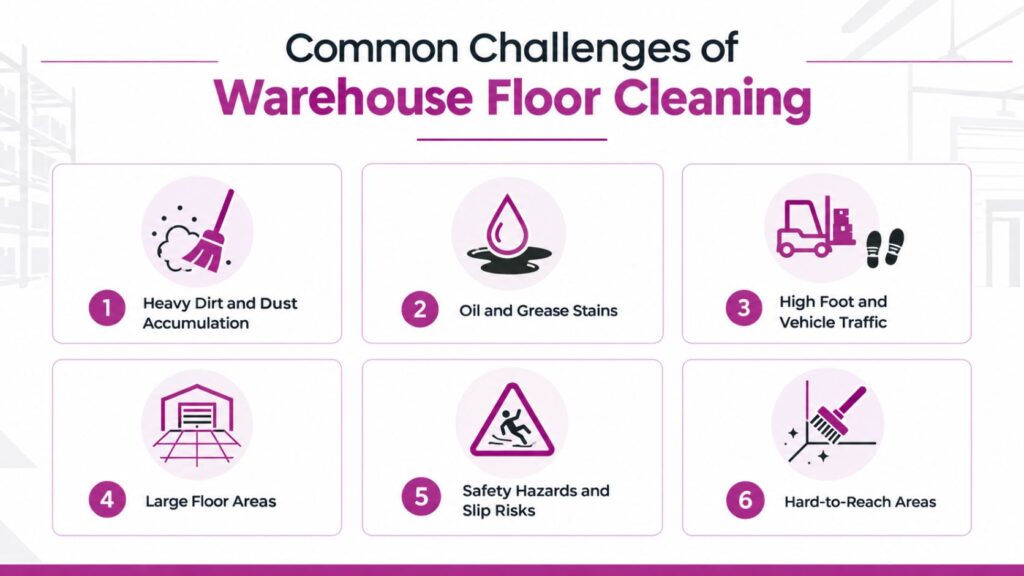
Maintaining warehouse floors can be more complicated than cleaning ordinary commercial spaces. Large floor areas, constant movement, and different types of dirt make it difficult to maintain consistent cleanliness.
Some common challenges include:
- Large Floor Areas: Expansive warehouse spaces require more time, labor, and suitable cleaning equipment.
- Heavy Equipment Traffic: Forklifts, pallet jacks, and other machinery continuously bring dirt, tire marks, and debris onto floors.
- Different Flooring Materials: Concrete, epoxy, and sealed floors have different cleaning and maintenance requirements.
- Hard-to-Reach Areas: Storage racks, machinery, narrow aisles, and corners can make thorough cleaning difficult.
- Limited Cleaning Time: Cleaning activities must be scheduled carefully to avoid interrupting deliveries, inventory movement, and daily operations.
Understanding these challenges makes it easier to create a cleaning plan that suits your facility.
10 Practical Ways to Keep Warehouse Floors Clean and Safe
A well-maintained warehouse requires a combination of routine cleaning, suitable equipment, and preventive care. Here are ten practical ways to keep your floors clean and safe.
1. Establish a Daily Cleaning Routine
Consistency is the foundation of effective warehouse floor maintenance. Create a daily cleaning schedule that covers essential tasks such as removing loose debris, checking for spills, clearing walkways, and inspecting high-traffic areas.
Assign specific responsibilities to employees or maintenance staff so important areas are not overlooked. A cleaning checklist can also help ensure tasks are completed regularly. A structured routine prevents dirt from accumulating and makes deeper cleaning easier.
2. Sweep or Vacuum Dust and Loose Debris
Warehouses often collect dust from cardboard, packaging materials, pallets, and everyday operations. If left unattended, these particles can spread throughout the facility and settle on equipment, inventory, and other surfaces.
Use industrial vacuums or suitable floor sweepers to remove dust and loose debris. Pay particular attention to corners, storage areas, loading zones, and spaces around machinery. Regular sweeping helps maintain cleaner surfaces and reduces the amount of dirt that can become embedded in the flooring.
3. Clean Spills and Stains Immediately
Oil, grease, water, and other liquid spills can quickly become safety hazards. Leaving them unattended increases the risk of slips and may cause permanent staining or surface damage.
Clean spills as soon as they are identified using products suitable for the substance and floor type. Keep spill kits accessible and train employees to follow the correct safety procedures. Use warning signs or barriers around affected areas until the floor is completely clean and dry.
4. Choose Between a Floor Sweeper and Scrubber
Selecting the right cleaning equipment can make warehouse floor maintenance faster and more effective. However, sweepers and scrubbers serve different purposes.
Floor Sweepers: These machines are designed to collect loose dust, dirt, cardboard pieces, and larger debris. They are useful for warehouses where dry particles accumulate across large floor areas.
Floor Scrubbers: These machines use water, cleaning solutions, and brushes or pads to remove stubborn dirt, grime, grease, and tire marks. They are suitable for floors that need deeper cleaning.
Some facilities benefit from using both. A sweeper can remove loose debris first, followed by a scrubber to clean the remaining grime.
Before selecting equipment, consider your warehouse size, floor material, aisle width, traffic levels, cleaning requirements, and available maintenance budget. The right equipment should suit your facility’s layout and cleaning needs.
5. Choose Cleaning Products Based on Floor Type
Not every cleaning solution works for every warehouse floor. Concrete, sealed concrete, epoxy, and other industrial flooring materials have different maintenance requirements.
Always select products that are compatible with your floor’s surface and protective coating. Avoid harsh chemicals that may cause discoloration, weaken sealants, or leave slippery residue. Check the flooring manufacturer’s recommendations before introducing a new cleaning product.
Businesses interested in environmentally responsible maintenance can also explore green cleaning solutions when selecting suitable products and cleaning methods.
6. Pay Extra Attention to High-Traffic Areas
Loading docks, forklift routes, main aisles, entrances, and packing stations usually collect more dirt than other warehouse areas. These locations experience frequent movement and are more likely to develop scuff marks, stains, and surface wear.
Inspect these areas regularly and increase cleaning frequency where necessary. Removing debris before it accumulates helps maintain safer walking and operating surfaces while preventing avoidable floor damage.
7. Keep Walkways and Storage Areas Clear
A clean floor is not enough if walkways are blocked by boxes, pallets, packaging materials, or unused equipment. Clutter creates trip hazards and makes routine cleaning more difficult.
Keep designated walkways, emergency exits, and equipment routes clear. Store materials in their assigned locations and remove damaged pallets or unnecessary items promptly. Clearly marked floor zones can also help employees maintain an organized warehouse layout.
8. Make Sure Floors Are Completely Dry
Wet floors can create serious slipping hazards, especially in areas where employees operate forklifts or move heavy materials. After mopping or machine scrubbing, allow sufficient time for the surface to dry before reopening the area to regular traffic.
Use wet-floor signs or temporary barriers to warn employees about recently cleaned surfaces. Where appropriate, choose equipment that removes excess water and reduces drying time. Proper drying is an important part of warehouse floor safety.
9. Schedule Regular Deep Cleaning
Daily sweeping and spot cleaning are important, but they may not remove all the dirt, grease, and residue that accumulate over time. Periodic deep cleaning helps address stubborn buildup and areas that routine maintenance cannot adequately reach.
Depending on warehouse activity and flooring conditions, schedule deeper cleaning weekly, monthly, or at other suitable intervals. Professional equipment and cleaning methods can help restore heavily soiled surfaces and maintain a more consistent level of cleanliness.
10. Inspect Floors and Address Damage Early
Regular inspections help identify problems before they become expensive repairs. Look for cracks, chipped concrete, peeling coatings, scratches, uneven surfaces, and areas where protective finishes have worn away.
Address minor damage promptly to prevent further deterioration and potential safety issues. If floors appear dull, heavily scratched, or stained despite regular cleaning, professional floor refinishing services may help restore their appearance and protective finish.
How Often Should Warehouse Floors Be Cleaned?
The ideal cleaning frequency depends on warehouse size, floor material, traffic volume, and the type of work performed. However, the following schedule provides a useful starting point:
- Daily: Remove dust, debris, and spills. Check walkways and high-traffic areas.
- Weekly: Perform more thorough sweeping and scrubbing, including corners and storage zones.
- Monthly: Inspect flooring for damage, stubborn stains, and areas requiring additional attention.
- Periodically: Arrange professional deep cleaning or floor refinishing based on the floor’s condition.
Warehouses with heavy machinery, frequent deliveries, or high foot traffic may require more frequent cleaning and inspections. Adjust the schedule according to the actual condition of your facility.
When Should You Consider Professional Warehouse Floor Cleaning?
Routine cleaning can manage everyday dirt, but some warehouse floors need more specialized attention. Persistent stains, grease buildup, worn protective coatings, and heavily soiled surfaces may require professional cleaning methods and equipment.
Professional industrial facility cleaning services can help maintain warehouses, manufacturing plants, and distribution centers through services such as floor sweeping, scrubbing, debris removal, and cleaning of loading areas. Having a suitable cleaning plan also helps businesses maintain cleaner workspaces without unnecessarily interrupting daily operations.
For ongoing cleaning needs, professional janitorial services can support regular facility maintenance. Businesses that need attention throughout operating hours may also benefit from day porter services, which help address spills, debris, and everyday cleaning requirements as they arise.
Keep Your Warehouse Floors Clean and Well-Maintained
A well-maintained warehouse floor supports workplace safety, improves daily operations, and helps protect your facility over time. From establishing daily cleaning routines to choosing suitable equipment and addressing floor damage early, small maintenance efforts can make a significant difference.
Paragon Peak Building Maintenance provides commercial and industrial cleaning solutions tailored to different facility requirements. If your warehouse needs dependable cleaning support, contact Paragon Peak to discuss a cleaning plan that helps keep your facility clean, organized, and ready for daily operations.
Frequently Asked Questions
What is the best way to clean warehouse floors?
The best approach is to remove loose debris through sweeping or vacuuming, clean spills promptly, and use suitable scrubbing equipment for stubborn dirt and grime. The cleaning method should match the floor material and level of buildup.
How often should warehouse floors be cleaned?
Most warehouses benefit from daily sweeping and spill cleanup, with more thorough scrubbing and inspections scheduled weekly or monthly. Facilities with heavy traffic may need more frequent cleaning.
What equipment is best for cleaning warehouse floors?
Industrial sweepers are useful for removing loose dust and debris, while floor scrubbers help remove grime, stains, and grease. Larger facilities may benefit from using both types of equipment.
How can warehouse floors be made safer?
Keep walkways clear, remove spills immediately, eliminate loose debris, use appropriate cleaning products, and ensure floors are completely dry before allowing regular traffic.
Why is professional warehouse floor cleaning important?
Professional cleaning helps address stubborn dirt, grease, and buildup that routine maintenance may not remove. It also provides access to suitable equipment and cleaning methods for demanding industrial environments.